Photo Credits: Visit Ballard
Once a City. Still Acts Like One.
Ballard has long stood apart from the rest of Seattle. Once an independent maritime town, it was annexed by Seattle in 1907, but its vibrant identity remains visible today in the neighborhood’s historic downtown and waterfront roots.
1. Ballard was originally its own city.
Before Ballard became part of Seattle, it was its own waterfront town. The area grew in the late 1800s along Salmon Bay, where mills, shipyards, and fishing boats took advantage of the protected water and access to timber:
- Originally called Shilshole. Early settlers used the name Shilshole, derived from a Lushootseed word tied to the local shoreline. The town was later renamed Ballard after Captain William Rankin Ballard, a Seattle ship captain and financier.
- Built around lumber production. Sawmills lined Salmon Bay, processing timber from nearby forests. At one point the area produced so many cedar shingles that Ballard became known as the “Shingle Capital of the World.”
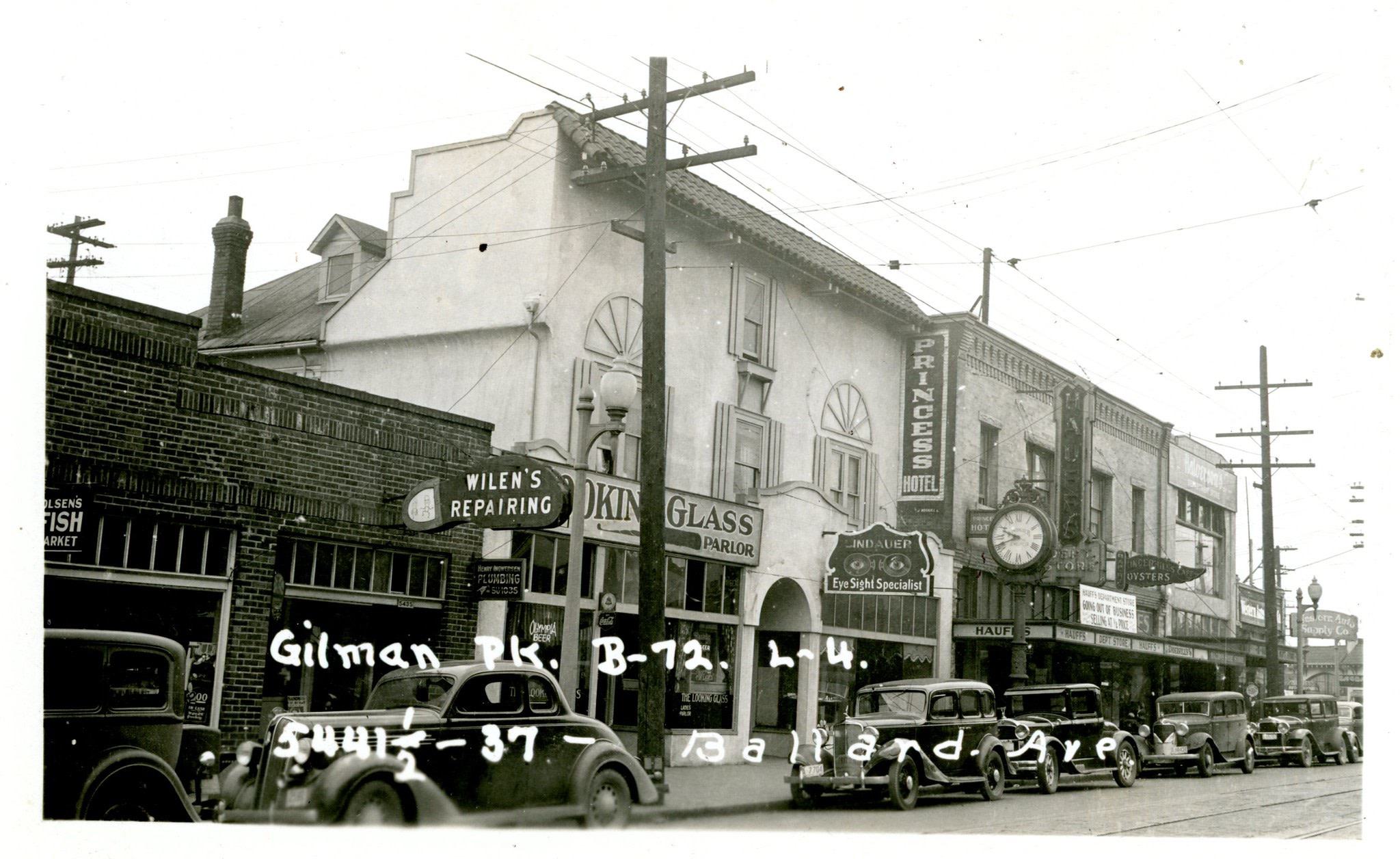
- Rebuilt after a major fire. A large fire in 1889 destroyed many of the early wooden buildings. When the town rebuilt, many commercial structures were constructed in brick.
- Incorporated as a city in 1890. As the population expanded, residents voted to incorporate and establish their own local government.
- A major fishing port. By the early 1900s, Ballard had become one of the most important fishing centers on the West Coast, with fleets operating out of nearby docks along Shilshole Bay.
- A strong Scandinavian community. Norwegian and Swedish immigrants made up a large share of the population and shaped much of Ballard’s maritime culture.
- A fully functioning city. Ballard had its own mayor, police department, schools, and commercial district centered around what is now Ballard Avenue.
- Annexed by Seattle in 1907. The decision was debated locally. Ballard needed a more reliable water supply, and annexation allowed the town to connect to Seattle’s municipal system.
Ballard officially became part of Seattle in 1907, but many still refer to the area as the “Republic of Ballard.”
2. It still has a distinct downtown.
Centered around Ballard Avenue NW and NW Market Street, Ballard's vibrant downtown district is lined with shops, galleries, delicious places to eat, and charming architecture.
- Historic architecture. Many of the brick buildings along Ballard Avenue date to the 1890s and early 1900s, giving the street a historical continuity that’s rare in newer parts of Seattle.
- Independent businesses. Local and independent restaurants, cafés, boutiques, and bars create a compact and charming walkable core.
- Regular neighborhood events. From the year-round downtown Ballard Farmers Market to Ballard SeafoodFest every July, unique recurring events keep downtown hopping.
- A major museum. The nearby National Nordic Museum is a great place to spend the afternoon diving into Ballard’s long Scandinavian history and cultural influence.
3. Geography sets it apart.
Water has always defined Ballard, which is bordered by water on two sides. Even today, crossing the Ship Canal into Ballard feels like entering a new place.
When the Lake Washington Ship Canal opened in 1917, it created a permanent boundary between Ballard and the neighborhoods to the south. Getting in and out still means crossing the Ballard Bridge (or Fremont Bridge).
Just west of the bridge, the Hiram M. Chittenden Locks, better known as the Ballard Locks, connect Puget Sound with Lake Union and Lake Washington. Boats pass through the locks every day, and the site is also known for its salmon ladder, where you can watch migrating salmon moving between the saltwater and freshwater systems.
4. It has everything you need.
Ballard is well its set up for daily life:
- Grocery stores and markets. Stores like Town & Country Market, Trader Joe’s, and Safeway cover everyday shopping needs.
- Restaurants and cafés. Ballard Avenue and NW Market Street are lined with restaurants, bakeries, and coffee shops, including longtime favorites like Victrola Coffee Roasters, San Fermo, and The Walrus and the Carpenter.
- One of Seattle’s best-known brewery districts. Ballard has one of the highest concentrations of breweries in the city, with places like Reuben’s Brews, Stoup Brewing, and Urban Family Brewing all within a short distance of downtown.
- Parks and waterfront access. Outdoor spaces are close by as well. Residents can walk to Salmon Bay Park or Bergen Place Park, visit the nearby Ballard Locks (Hiram M. Chittenden Locks), or head to the beach at Golden Gardens Park and the scenic overlook at Sunset Hill Park. For waterfront dining, locals often head to Ray’s Boathouse.
5. It has a strong local identity.
Even after joining the city more than a century ago, Ballard has one of the strongest neighborhood identities in Seattle. An ongoing call to “Free Ballard" winks at its independent past.
- Scandinavian heritage. Norwegian and Swedish immigrants helped shape Ballard’s early fishing and maritime industries. The National Nordic Museum anchors those cultural ties today, and along Ballard Avenue you’ll often see Nordic flags hanging from streetlamps. The Ballard Tomte Trail is also a fun holiday tradition.
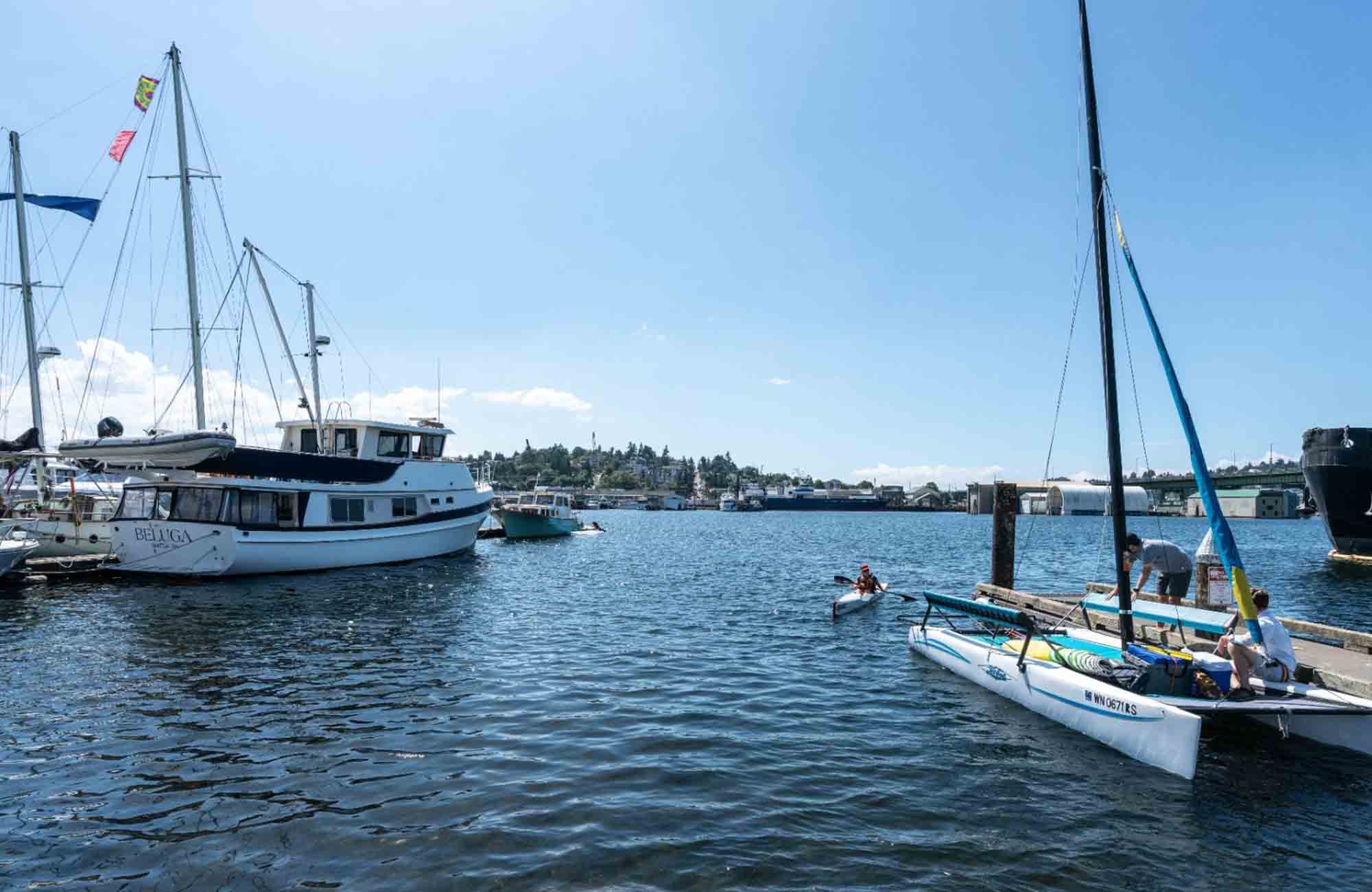
- A working waterfront. Fishing boats are still moored along Salmon Bay, and marine traffic passes daily through the nearby Ballard Locks, connecting Puget Sound with Lake Union and Lake Washington.
- A preserved historic main street. Brick buildings along Ballard Ave. from the 1890s and early 1900s still host a vibrant downtown.
- A thriving brewery district. Ballard has one of the highest concentrations of breweries in Seattle, with places like Reuben’s Brews, Stoup Brewing, and Urban Family Brewing all within a few blocks.
- Frequent events. The monthly Ballard ArtWalk, summer Ballard SeafoodFest, year-round Ballard Farmers Market, and more continue to bring people together.
Welcome to the Republic of Ballard
Ballard still feels like the town that grew along Salmon Bay: a historic main street, Scandi roots, and a working waterfront. Cross the Ship Canal and the difference is easy to notice in the rhythm of the bridges, the fishing boats along the bay, and the busy downtown streets. Welcome home.